
- Local: (604) 576-8666
- Toll free: 1 (800) 991-1852

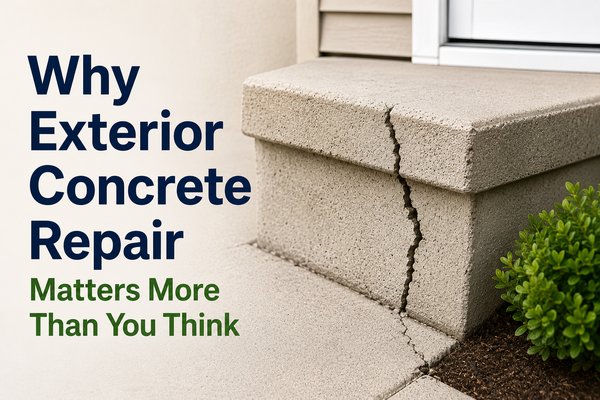
Concrete is one of those things most people barely notice in their daily lives. You walk on it, drive on it, and expect it to just “be fine” all the time. Driveways, sidewalks, steps, patios, and walkways all feel solid and permanent.
But concrete is strong, not invincible. Over time, it slowly wears down, and before you know it, minor damage becomes a full-scale repair project. Concrete repair is often delayed simply because the damage does not appear urgent at first. The problem is, concrete issues usually start small before they become obvious.
Small Cracks Are Usually the First Sign of Trouble
Almost every concrete problem begins with a crack. At first, it might look harmless. A thin line on a driveway or a small split on a walkway is easy to ignore. Many people assume it is just cosmetic. But those cracks often allow water to get inside the concrete surface. Once water gets in, it starts to change things underneath.
When temperatures drop, that trapped water freezes and expands. When it expands, it pushes the concrete apart from the inside. Then it melts, and the cycle repeats again and again. Each cycle makes the crack a little worse. This is why early exterior concrete repair is so important. Fixing small cracks early usually prevents much larger damage later on.
Uneven Concrete Can Become a Safety Issue
Concrete does not always stay level. Over time, the ground underneath can shift or settle. Sometimes this happens naturally. Other times, it is caused by water softening the soil below the surface. When that happens, parts of the concrete can sink while others stay in place. The result is an uneven surface. At first, it might not seem like a big deal. But even a small height difference between slabs can become a trip hazard. This is especially important in walkways, entrances, and commercial spaces where people are constantly moving. Professional concrete repair can level the surface again and help stabilize the base underneath so the problem does not keep coming back.
Weather Plays a Bigger Role Than People Realize
Concrete is constantly reacting to the weather. Hot weather causes it to expand. Cold weather causes it to contract. Rain and snow add moisture that slowly seeps into tiny cracks. Over time, this constant movement weakens the surface. In colder regions, salt used during winter can also speed up surface wear. It slowly breaks down the top layer of concrete, increasing the likelihood of cracking or flaking. So even if nothing “big” happens, the environment still slowly affects concrete surfaces.
Water Is Often the Hidden Cause of Damage
One of the most common hidden issues behind concrete damage is poor drainage. If water collects near driveways, steps, or walkways, it slowly seeps into the ground underneath. Over time, this can weaken the support beneath the concrete. When the base becomes soft or unstable, the surface above it starts to crack or sink. This is why exterior concrete repair is not just about fixing what you see on top. It often involves checking what is happening beneath the surface as well. If the drainage issue is not resolved, the same damage will recur.
Quick Fixes Do Not Solve the Real Problem
People sometimes try to fix concrete cracks with store-bought fillers or patch kits. Unfortunately, these DIY fixes do not address what caused the damage in the first place. If water is still getting underneath the slab or the ground is still shifting, the crack will likely return. Professional repair focuses on the full picture. That means looking at the surface, the base underneath, and the surrounding area to understand why the damage happened.
Concrete may not be the most exciting part of a property, but it plays a big role in how everything feels. At Kings Services, exterior concrete repair is not just about fixing visible damage. We help you understand why the damage happened and ensure it doesn’t happen again.