
- Local: (604) 576-8666
- Toll free: 1 (800) 991-1852

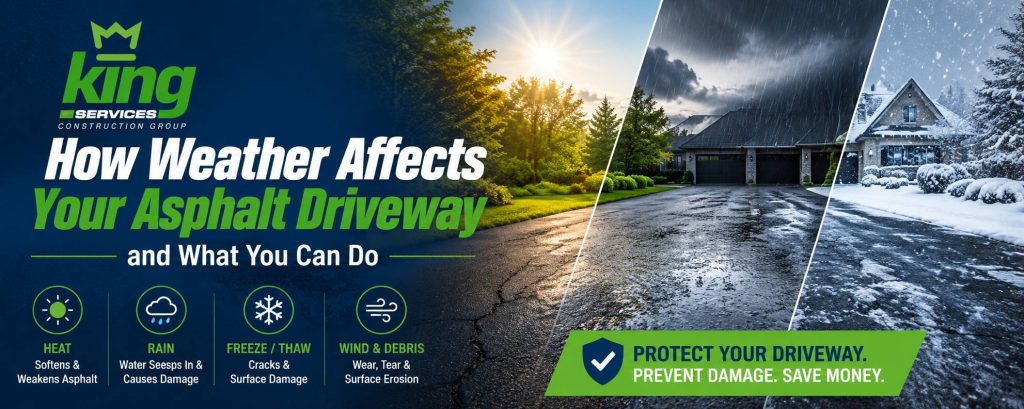
Your asphalt driveway might look solid and simple enough, but it deals with a lot every single day. Cars are driving over it. Rain is soaking into it. The sun is beating down on it. Cold temperatures freeze, thaw and expand underneath. Over time, all of this adds up.
In Vancouver, a city which can see rain, snow, and sun all in a day, your driveway is constantly battling the elements. The city’s weather has a significant impact on your asphalt driveway. But the good news is, once you understand what’s happening, you can take the right steps to protect it.
Rain Is Constant, and It Matters
Vancouver is known for its rain, and your driveway definitely knows it, too. Water might not seem like a big deal at first, but it slowly seeps into small cracks and tiny openings in the asphalt. Once it gets in, it starts weakening the structure from the inside. Now here’s where it gets worse. If temperatures drop, that trapped water can freeze and expand. This puts pressure on the asphalt, causing cracks to grow bigger. Even without freezing, constant moisture can soften the surface. This can lead to uneven areas or early wear with repeated exposure.
Cold Weather Causes Cracking
When temperatures drop, asphalt cannot adjust as easily to pressure, whether from vehicles or from changes in the ground beneath. At the same time, the ground underneath your driveway can shift slightly due to freezing conditions. This creates stress on the surface.
The result? Cracks. Some may start small, but they rarely stay that way. Once a crack forms, it gives water an easy path below the surface, worsening the problem over time. Cold weather doesn’t just create cracks. It helps them grow.
Sudden Weather Changes Make Things Worse
One of the biggest challenges for asphalt is not just specific weather conditions, but how quickly they can change. Rain followed by a cold night. A warm day after a stretch of wet weather. These shifts cause the material to expand and contract. When asphalt keeps expanding and shrinking, it creates stress within the surface. Over time, that stress leads to cracks, surface wear, and other damage. It’s like bending something back and forth repeatedly. Eventually, it weakens.
Why Small Issues Turn Into Big Problems
A small crack might not seem urgent. But once the weather comes into play, things can change quickly. Water gets in. Cold temperatures expand it. Heat softens the surrounding area. And suddenly, that small crack becomes a larger one. This is why driveway issues often feel like they appear “all at once.” In reality, they’ve been building slowly, and the weather is what pushes them to the next stage.
What You Can Do About It
Here’s the important part. To protect your driveway, you cannot rely on quick fixes or temporary solutions. The right care for your asphalt driveway starts with professional sealing, which creates a barrier to prevent water from seeping in and reduces weather damage. However, if your asphalt already has cracks, early intervention is key. By letting professionals fill and seal the cracks, you prevent more serious damage. They may even resurface the asphalt if the driveway has worn down over time, providing a fresh, smooth layer and extending its lifespan. The key is timing. Addressing issues early is always easier and more cost-effective than waiting until the damage spreads.
A Driveway That Lasts Longer
Your driveway is part of your home’s first impression. But more than that, it’s something you use every day. The weather will always be a factor. You cannot control the rain or the temperature changes. But you can control how well your driveway is protected.
At King Services, we help homeowners keep their asphalt surfaces looking new with professional solutions designed to withstand local weather conditions. Because when your driveway is properly maintained, it does more than just look good. It holds up, season after season, without turning into a bigger problem down the line.