
- Local: (604) 576-8666
- Toll free: 1 (800) 991-1852

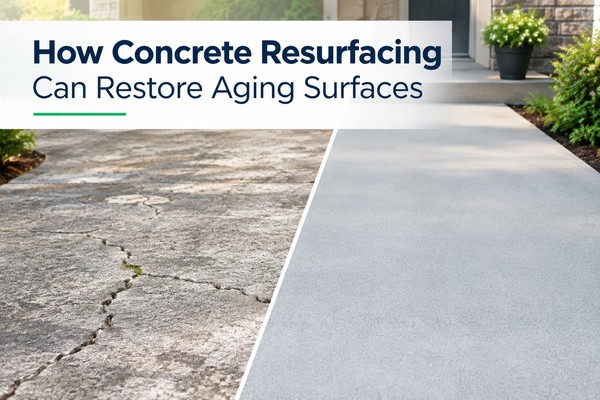
Concrete is a durable and versatile material used for driveways, patios, sidewalks, garage floors, and commercial spaces. However, even well-installed concrete can show signs of aging over time. Constant exposure to sunlight, rain, moisture, temperature changes, heavy traffic, and everyday wear can leave concrete surfaces looking dull, stained, rough, or worn out. Fortunately, replacing the entire surface is not always necessary. Concrete resurfacing offers a practical way to restore the appearance and improve the functionality of aging concrete without the cost and disruption of complete replacement.
Whether you want to refresh your residential driveway or improve the appearance of a commercial property, concrete resurfacing can help transform existing concrete into a cleaner, smoother, and more attractive surface.
What Is Concrete Resurfacing?
Concrete resurfacing is a restoration process that involves applying a specialized resurfacing material over existing concrete. Instead of removing the entire concrete slab, contractors prepare the existing surface and apply a suitable overlay to improve its appearance and performance.
The process typically includes cleaning the concrete, repairing minor surface damage, preparing the substrate, and applying a resurfacing compound. Depending on your preferences and the condition of the concrete, the finished surface can be customized with different colors, textures, patterns, and decorative effects.
Concrete resurfacing is suitable for many residential and commercial applications, including driveways, patios, walkways, pool decks, garage floors, and selected interior concrete surfaces. However, the existing concrete must be structurally sound for resurfacing to provide lasting results.
1. Restores the Appearance of Old and Worn Concrete
One of the biggest benefits of concrete resurfacing is its ability to improve the appearance of aging surfaces. Over time, concrete can develop discoloration, surface stains, faded patches, and minor imperfections that make a property look neglected.
A professionally applied concrete overlay creates a refreshed surface that can significantly improve the overall appearance of your outdoor or indoor space. Property owners can also choose decorative finishes that complement their home’s exterior, landscaping, or commercial design.
For example, resurfacing an old driveway can create a cleaner entrance to your property, while updating a patio can make an outdoor living area more inviting.
If your concrete looks tired but remains structurally stable, resurfacing may be an effective way to restore its appearance without replacing the entire slab.
2. Repairs Minor Surface Damage
Aging concrete may develop small pits, shallow cracks, surface scaling, and areas of wear. These imperfections can affect both the appearance and usability of the surface.
Concrete resurfacing can address many minor surface defects when the damaged areas are properly repaired before the overlay is applied. The preparation process is essential because loose concrete, contaminants, and untreated damage can prevent the new material from bonding correctly.
However, resurfacing is not a universal solution for every concrete problem. Deep cracks, significant settlement, extensive spalling, and structural damage may require more substantial repairs or complete replacement.
A professional assessment helps determine whether the existing concrete is suitable for resurfacing and which preparation methods are necessary.
3. Provides a Cost-Effective Alternative to Replacement
Replacing a concrete driveway, patio, or walkway can involve demolition, debris removal, additional materials, labor, and installation time. These expenses can add up, particularly when the affected area is large.
Concrete resurfacing can reduce these costs by preserving the existing concrete slab whenever its condition allows. Since the original foundation remains in place, the project may require less demolition and material removal than a full replacement.
The final cost depends on the surface area, the extent of damage, preparation requirements, selected finish, and local labor rates. Extensive repairs or specialized decorative finishes can increase the overall investment.
For property owners looking for a balance between appearance, durability, and budget, concrete resurfacing can be a worthwhile option when the existing slab is suitable.
4. Improves Durability and Surface Protection
A properly installed concrete resurfacing system can help protect an aging surface from everyday wear and environmental exposure. Depending on the product selected, the new overlay may provide improved resistance to abrasion, moisture penetration, and regular foot traffic.
This can be especially useful for patios, walkways, and other areas exposed to changing weather conditions. In regions that experience freezing temperatures, moisture management and the use of suitable materials are particularly important because freeze-thaw cycles can contribute to concrete deterioration.
Surface preparation, correct application, adequate curing, and appropriate maintenance all influence the performance of the finished surface. A compatible sealer may also help reduce staining and make routine cleaning easier.
It is important to remember that resurfacing does not eliminate the underlying causes of concrete damage. Problems such as poor drainage, ongoing ground movement, or persistent water infiltration should be addressed before restoration.
5. Offers Decorative Design Options
Concrete resurfacing is not limited to restoring a plain gray finish. Modern resurfacing materials offer a range of decorative possibilities, allowing property owners to customize the look of existing concrete.
Popular options include colored overlays, textured finishes, stamped patterns, and finishes designed to resemble natural stone or other materials. These options can enhance the appearance of driveways, patios, entryways, pool decks, and selected commercial spaces.
For outdoor areas, the finish should be selected with safety and maintenance in mind. A suitable texture can help provide traction, particularly in areas exposed to rain or splashing water. Pool decks and other frequently wet surfaces may require specialized slip-resistant finishes.
By selecting the right design, you can improve the appearance of your concrete while maintaining a finish suited to the space’s intended use.
6. Increases Property Appeal
The condition of your driveway, walkway, patio, and other visible concrete surfaces can influence the overall impression of your property. Cracked-looking, stained, or deteriorating concrete may make an otherwise well-maintained home or business appear older than it is.
Concrete resurfacing can create a more consistent and attractive appearance, helping improve curb appeal and the usability of outdoor spaces. For commercial properties, clean and well-maintained walkways and entrances can also contribute to a more professional environment for customers and visitors.
Although resurfacing does not guarantee an increase in property value, it can be a practical improvement for owners preparing to sell, lease, or simply maintain their property.
When Should You Consider Concrete Resurfacing?
Concrete resurfacing may be appropriate when the existing slab is stable but has visible surface wear, discoloration, shallow imperfections, or minor damage. It is generally less suitable for concrete with severe cracking, major settlement, extensive deterioration, or significant structural problems.
Before starting a project, have the surface inspected to identify the cause of the damage and determine whether resurfacing, localized repairs, or replacement is the most suitable solution.