
- Local: (604) 576-8666
- Toll free: 1 (800) 991-1852

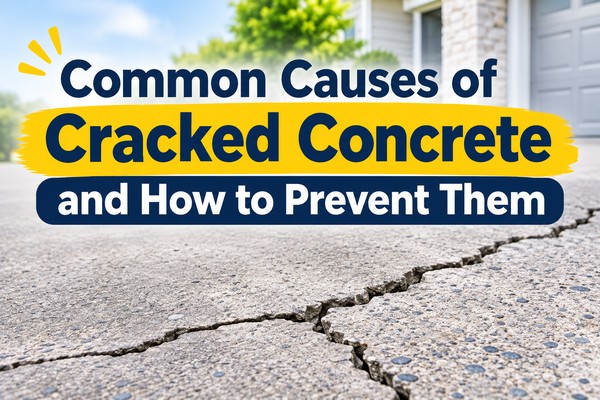
Concrete is renowned for its strength, durability, and versatility, making it the material of choice for commercial walkways, loading docks, ramps, curbs, and building slabs. Even though concrete is exceptionally durable, seeing cracks develop in a newly poured or established slab is a common frustration for property owners. Minor hairline surface cracks can happen naturally, but wide, uneven cracks lead to safety hazards, water intrusion, and costly structural repairs.
Understanding why concrete cracks is the key to preventing problems during installation and preserving existing surfaces. Here are the most common causes of cracked concrete and the best practices to keep your concrete solid.
Poor Sub-Base Preparation and Compaction
A concrete slab is only as stable as the soil and gravel underneath it. If the subgrade is poorly compacted, uneven, or prone to shifting, the concrete will bridge over soft pockets. As heavy vehicles or equipment pass over the slab, the unsupported concrete flexes and snaps under the load. Proper installation requires excavating organic material, laying a uniform crushed gravel base, and thoroughly compacting the subgrade with mechanical vibratory equipment before any concrete is poured. Skipping thorough ground compaction is one of the most common shortcuts that leads to premature cracking.
Adding Too Much Water to the Concrete Mix
During pouring, adding extra water makes concrete easier to pour and rake into place. However, excessive water severely weakens the finished product. As the concrete cures and the extra water evaporates, it leaves behind microscopic voids that reduce compressive strength and increase shrinkage. That shrinkage creates internal tension that results in noticeable surface cracks. Professional contractors maintain a strict water-to-cement ratio and use specialized plasticizers to ensure optimal strength while keeping the mix workable without weakening the slab.
Rapid Surface Drying During Curing
Concrete does not simply dry out; it undergoes a chemical reaction called hydration that locks aggregate and cement together. If the surface dries too quickly due to high heat, direct sun, or brisk wind, the outer layer shrinks much faster than the moist concrete beneath it. This rapid moisture loss causes plastic shrinkage cracks across the surface. Proper curing techniques, such as applying curing compounds, continuous misting, or using wet burlap covers, keep moisture in the slab while it gains strength over its first few critical days.
Improper Placement of Control Joints
Concrete inevitably expands with heat and contracts with cold. Because minor shrinkage is natural, concrete slabs need planned weak points where cracks can occur cleanly out of sight. These are called control joints. If control joints are cut too shallow, spaced too far apart, or cut too late after the pour, the concrete will crack randomly across the visible surface instead. Proper joint spacing, adequate depth, and timely cutting guide natural movement into neat, controlled lines that protect the structural integrity of the slab.
Freeze-Thaw Weather Cycles
Canadian winters subject exterior concrete to continuous freeze-thaw cycles. Because concrete is porous, unsealed surfaces absorb rainwater and melted snow. When temperatures drop below freezing, that trapped water turns to ice and expands by about nine percent. This internal pressure causes spalling, surface scaling, and progressive cracking. Applying a high-quality penetrating concrete sealer stops moisture from entering the pores and protects the slab from winter moisture damage.
Reliable Concrete Services with King Services
Preventing cracked concrete comes down to quality materials, thorough site preparation, and correct installation methods. If your commercial property has cracked sidewalks, sinking slabs, or damaged curbs, addressing them promptly prevents liability risks and further structural decay. King Services delivers professional concrete installation, repair, and replacement for commercial and industrial clients. Reach out to our experienced team today to discuss your concrete project or request an on-site evaluation.